
At 9:17 AM on an ordinary weekday, a post goes live.
By 9:23 AM, it has 2,000 reposts.
By 10:05 AM, a hashtag has formed.
By noon, news channels are calling.
By evening, the brand’s market cap has taken a hit.
A wake-up call for modern reputation revival specialists – when a crisis doesn’t knock on the door anymore, it breaks the internet!!
In India’s hyper-socially connected landscape, where millions engage across platforms in real time, brand reputation is no longer built over decades; it’s negotiated every minute. Technology, once the amplifier of crises, is now also the only viable antidote.
As a brand under fire, how much time does it take to flip the switch?
Not long ago, crises unfolded slowly. A newspaper article. A delayed press release. A carefully crafted response.
Today? A single post can ignite a nationwide backlash within minutes. In India, where digital penetration is massive and rising, crises escalate at unprecedented speed. A report notes that social media backlash, regulatory scrutiny, and cultural sensitivities can collide and escalate ‘in minutes,’ not days.
Consider this –
Over 1,000 photos are uploaded to Instagram every second, creating an always-on narrative battlefield. A single decision or misstep can spiral into a full-blown crisis almost instantly due to the influence of online platforms.
In this environment, silence is not neutrality – it is negligence.
Lessons from the past
Kingfisher Airlines and the cost of Saying Nothing
Once India’s most glamorous airline, Kingfisher collapsed under debt. But what accelerated its downfall wasn’t just financial mismanagement – it was communication failure.
Employees went unpaid. Flights were cancelled. And the brand chose silence.
The result was total erosion of trust. A once-celebrated brand became a cautionary tale of ‘media stonewalling.’
In the absence of communication, speculation filled the void.
IndiGo’s 2025 Crisis
In 2025, IndiGo cancelled over 2,000 flights, impacting tens of thousands of passengers and triggering social media outrage.
But unlike Kingfisher, the airline responded with public apologies, crisis teams, and constant updates.
It wasn’t perfect. But it was visible.
And in today’s world, visibility is credibility.
Byju’s transparency deficit
From a $22 billion valuation to a dramatic collapse, Byju’s downfall highlighted a crucial gap – the lack of transparent communication during a crisis.
When stakeholders don’t hear from the brand, they listen to the internet.
And the internet rarely whispers.
Zomato, turning Crisis into Narrative
When Zomato faced backlash over its ‘pure veg fleet’ announcement, the response wasn’t silence; it was swift recalibration.
The company withdrew the policy, communicated openly, and reframed the narrative.
The right tinge of Tech
Today, brands are not judged for making mistakes but for how quickly they course-correct.
Modern crisis management is no longer PR-led alone. It is technology-enabled, data-driven warfare.
Here’s the stack that is quietly redefining brand reputation.
Hearing the Storm before it Hits
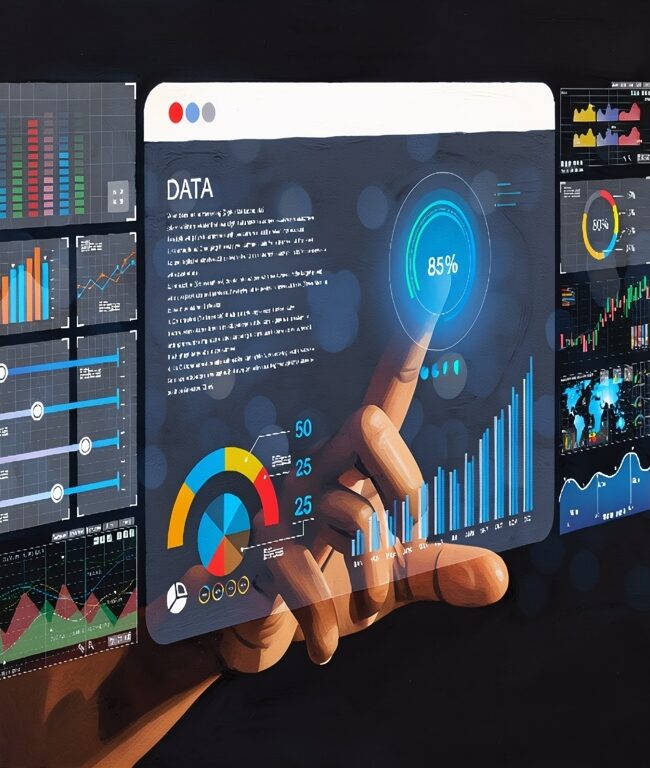
Imagine being able to sense a crisis before it gathers momentum – before it trends, before it spirals. That is the power of social listening. Today’s advanced platforms continuously scan millions of conversations across X, Instagram, Reddit, and online forums, picking up early signals of dissatisfaction, outrage, or concern.
In India, leading PR frameworks increasingly rely on this always-on sentiment tracking to monitor brand mentions and decode shifts in public mood in real time. The distinction it creates is critical. Instead of reactive PR that scrambles to respond after outrage erupts, brands can move toward proactive reputation management, addressing issues while they are still contained.
In a market as culturally nuanced and emotionally diverse as India, where even minor missteps can trigger disproportionate backlash, this early-warning capability is not just useful; it is indispensable.
Reading Emotion at Scale
It’s no longer enough to simply track what people are saying about a brand; understanding how they feel is where the real insight lies.
AI-driven sentiment analysis tools make this possible by classifying conversations into positive, negative, or neutral tones, while also detecting subtle emotional shifts such as spikes in anger, sarcasm, or distrust. They go a step further by identifying the influencers and voices shaping these narratives, allowing brands to focus their response where it matters most. In doing so, crisis management evolves from instinct and guesswork into a more precise, data-driven discipline grounded in real-time intelligence.
A modern PR team doesn’t ask, ‘Is this bad?’
They ask, ‘How bad, and where is it spreading?’
Automated Response Systems
When thousands are posting simultaneously, manual responses quickly become unsustainable. This is where automation steps in to restore order and efficiency. Chatbots handle first-level queries instantly, while pre-approved response templates ensure consistent communication across channels. At the same time, clearly defined escalation protocols route more complex or sensitive issues to human teams for intervention.
The result is a system where no customer feels ignored, and no message contradicts another. In moments of crisis, this consistency becomes critical because while it builds trust, even a hint of chaos can erode it just as quickly.
Fighting Misinformation
Fake news has become the invisible accelerant of modern brand crises, intensifying situations far beyond their original scale. From bot-driven review attacks to rapidly spreading misinformation, the threats brands face today are often engineered rather than organic.
In response, reputation management firms are turning to sophisticated solutions such as bot detection systems, review authenticity algorithms, and collaborations with fact-checking networks to separate signal from noise. There have been instances where coordinated waves of fake reviews have caused ratings to plummet, only to later be traced back to organised bot activity.
In this evolving landscape, the battle is no longer just about managing perception-it’s about defending the very notion of truth.
Controlling the Narrative
Not all voices carry the same weight in shaping a brand’s narrative. Some amplify conversations, while others have the power to neutralise them. Technology enables brands to identify key opinion leaders, track micro-influencers who are driving discussions, and pinpoint communities where sentiment is beginning to shift.
With this intelligence, brands can engage far more strategically, stepping in to correct misinformation, provide clarity, and rebuild trust where it matters most. In a market like India, where influencer culture is deeply embedded in digital behaviour, this capability becomes an especially powerful lever in managing reputation.
Looking Ahead
Agentic AI and Autonomous Crisis Management
We are stepping into a new era where AI no longer merely assists but actively takes charge. Imagine intelligent agents that can detect subtle anomalies in brand sentiment before they escalate, systems that simulate potential crisis scenarios to prepare responses in advance, and automated narrative engines that craft real-time communication with precision and speed.
This is not a distant vision of the future; it is already unfolding. As these capabilities mature, crisis management will become increasingly predictive by anticipating issues before they surface, responding instantly without human lag, and hyper-personalised, tailoring communication at scale to resonate with diverse audiences.
Reputation in Real-Time
A brand today is no longer defined by what it says about itself, but by what the internet is saying about it in any given moment. In this always-on reality, crisis management is no longer a siloed function – it is an ongoing capability.
Technology, too, has evolved beyond being a mere tool; it has become the first responder, stepping in at the very onset of a potential crisis.
Because when the next post goes live, and it inevitably will – the real question is not whether a crisis will occur, but whether your brand will be prepared to respond before the world begins to take notice.

Post a Comment