

A record in itself
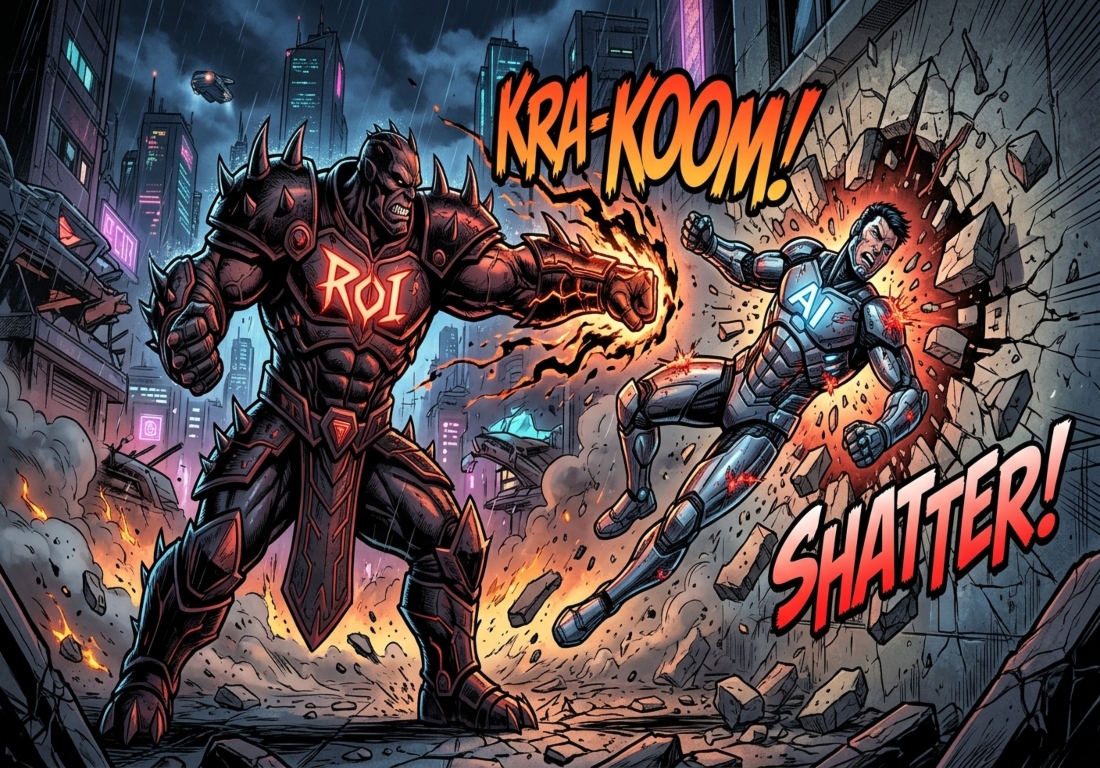
In less than four months, China’s AI trade went from national obsession to cautionary tale. The STAR 50, the Shanghai index that tracks the country’s chip and AI champions, fell roughly 40% from its summer high and erased about $480 billion in market value, according to Reuters reporting carried by the Kathmandu Post. The broader CSI 300 is down about 20% from its June peak.
The individual stories read like a case study in speculative caution. Robot maker Unitree’s retail offering was 8,000 times oversubscribed; its shares have halved since its August debut. GPU designers MetaX and Moore Threads jumped 700% and 400% on their first trading days last year and have each lost half their value since July. Optical-module suppliers Zhongji Innolight and Eoptolink, darlings of the global data-center buildout, are down about 60% from their peaks.
“The stock market later evolved into a speculative crazy bull,” Beijing fund manager Dong Baozhen told Reuters. “Now we see the bubble bursting.”
For executives and investors outside China, the tempting response is to treat this as a local accident – as retail speculation, an opaque regulator, geopolitical exposure. That would be a mistake. China did not invent a new kind of AI bubble. It simply ran the global playbook faster, with less cushion, and in public. The question every board should be asking is not whether China’s crash will be copied tick for tick, but which of its ingredients are already present in their own markets, and what that implies for the return on the trillions now being committed to AI.
The Market Reset
There was no single trigger, and that is the first lesson. Traders pointed to stretched valuations, tax bills, worries about AI demand, and the threat of Western bans on Chinese data-center equipment. Each was manageable alone. Together, in a market built on momentum, they were enough. Four forces did most of the damage.
Valuations that assumed perfection.
At its peak, the STAR 50 traded near 250 times trailing earnings. Even after the fall, it sits around 100 times, against roughly 30 times for the Nasdaq 100. When a price embeds a decade of flawless execution, any doubt becomes a sell signal.
One theme swallowed the market.
Goldman Sachs estimates that AI stocks made up 42% of China’s market capitalization and 57% of trading turnover across mainland A-shares and Hong Kong H-shares. When a single narrative drives more than half of all trading, there is no diversification left, only correlation.
Price wars ate the business model.
This is the part global executives should study hardest. Hong Kong-listed model maker MiniMax halved API fees for its M3 model a week after launch, then shipped a version that cut usage costs a further 70%, Caixin reported. First-half revenue rose 283% to $117 million, yet the company lost $358 million on a 17.9% gross margin. Its shares are down about 88% from their March peak and slipped below the IPO price on Oct. 22. Rival Zhipu AI, down roughly 85% from its June high, still traded at about 18 times annualized recurring revenue. With DeepSeek and others releasing capable models at rock-bottom prices, intelligence itself was becoming a commodity faster than anyone could monetize it.
Policy and geopolitics cut both ways.
Beijing’s backing inflated the rally; its effort to cool it, through curbs on leveraged and high-frequency trading and state-backed selling into strength, helped deflate it. Meanwhile, Washington moved to bar suppliers such as Innolight and Eoptolink from US data centers, turning a growth story into a market-access risk overnight.
Morgan Stanley expects offshore Chinese stocks to fall another 10% to 15% before they bottom. The repricing, in other words, may not be finished.
Could it happen everywhere?
The short answer: a correction is likely; a China-style collapse is not, at least not yet. The ingredients are present in Western markets, but in milder doses and with sturdier balance sheets underneath.
| Warning sign | China (STAR 50 / A- and H-shares) | United States (Nasdaq 100 / S&P 500) |
| Valuation | ~250x earnings at peak; ~100x now | ~30x earnings |
| Concentration | AI = 42% of market cap, 57% of turnover | Top 10 stocks = ~43% of S&P 500 value, a record |
| Drawdown | STAR 50 down ~40% since summer | Nasdaq down ~6% from early-October record |
| Who owns it | Retail-dominated | Institution-dominated |
| Who pays for AI | IPO proceeds, state funds, loss-making startups | Mostly cash flow from profitable hyperscalers |
Sources: Reuters via Kathmandu Post; InvestmentNews; 24/7 Wall St.
The concentration row should give pause. The ten largest US companies now hold about 43% of the S&P 500’s value, nearly double the 18% to 23% average of 1990 to 2015, per RBC Wealth Management data. That is roughly the same share of market value that AI names held in China before the fall. An index fund is no longer a diversified bet; it is a leveraged view on one technology cycle.
Then there is the spending. Microsoft, Alphabet, Amazon and Meta are on track for roughly $725 billion in combined capital expenditure in 2026, up about 77% from around $410 billion in 2025, according to figures compiled by Tech Insider. Microsoft’s AI business has reached a $37 billion annual run rate, growing 123%. That is impressive, and still small against the infrastructure bill. Goldman Sachs analysts have described the annual gap between AI infrastructure spending and AI-generated revenue in the hundreds of billions of dollars.
The critical difference is who absorbs the risk. China’s AI champions financed growth with hot IPOs and retail enthusiasm; when sentiment turned, nothing caught them. America’s hyperscalers fund most of their buildout from enormously profitable core businesses and carry $627 billion in contracted future revenue at Microsoft alone. They can survive a disappointing payback period. Their investors may simply earn lower returns.
The real fault lines lie elsewhere: in pure-play model developers whose prices are being undercut by open-weight rivals, in debt-financed data-center operators, and in chip- and component-heavy markets whose fortunes ride on capex guidance. MiniMax is the template. Revenue nearly quadrupled and the stock still fell almost 90%, because growth bought with collapsing prices is not the same as value. Any company, in any market, selling undifferentiated intelligence by the token faces the same arithmetic.
Where returns will come from
If markets are repricing AI, it is because the returns have not yet shown up where it matters most: inside ordinary companies. The latest data is remarkably consistent.
- McKinsey (1,719 respondents, 97 countries): only 6% of organizations qualify as AI high performers, attributing at least 5% of EBIT to AI. That share is unchanged from last year. Some 63% report no measurable earnings impact, and about 90% of function-level use cases remain stuck in pilots (TechTimes).
- Deloitte (3,500 leaders, 25 countries): 28% report revenue gains from AI, up from 20% in January; just 25% use AI to transform their business rather than tune it (Deloitte via PR Newswire).
- Dun & Bradstreet (10,000 businesses, 32 countries): 28% see broad or strong returns, while 65% still plan to spend more next year (PR Newswire).
Read together, the numbers describe a classic general-purpose-technology curve. Adoption is nearly universal (98% of firms in the D&B sample have active AI initiatives), but value is concentrated in a minority that has done the unglamorous work. That pattern, not the headline average, is what should shape expectations for ROI.
Three shifts are likely over the next three to five years.
First, returns migrate from builders to users.
In every infrastructure boom, from railroads to fiber optics, the people who laid the track rarely captured most of the value. China’s model price war is an early, brutal preview: as the cost of intelligence falls toward zero, margins compress for sellers and expand for buyers. The winners of the next phase are likely to be companies that apply cheap AI to proprietary data, workflows and customers, not those that sell generic capability.
Second, data readiness becomes the dividing line.
Dun & Bradstreet found that 81% of businesses with fully AI-ready data report broad or strong ROI, versus 12% of those with only partially ready data, a gap of more than 6.5 times. Yet only 8% describe their data as fully ready. That is the clearest signal in this entire debate: the binding constraint on AI returns is not models or chips but the condition of a company’s own information.
Third, workflow redesign separates leaders from spenders.
Nearly three-quarters of McKinsey’s high performers redesigned workflows around AI, compared with about a quarter of everyone else. They are twice as likely to measure impact rigorously and more than three times as likely to scale agents across most functions. Bolting a chatbot onto an old process produces a demo. Rebuilding the process produces a return.
For investors, the implication is a longer, lumpier payback. Hyperscaler returns on capital will probably dip as depreciation on 2025 and 2026 spending flows through income statements, before recovering if enterprise demand matures. For operating companies, the outlook is more encouraging: falling AI costs are a gift to anyone ready to use them well.
What leaders should do now?
Price AI as a utility, not a moat.
Assume the cost of a given level of capability keeps falling sharply. Build plans that profit from cheaper models instead of depending on today’s prices.
Fund data before models.
Make data readiness a board-level metric. It is the single best predictor of AI returns in the current evidence.
Measure unit economics.
Only 44% of companies in Deloitte’s survey track per-unit inference cost. Every AI program should report cost per task and value per task, not just usage.
Stage-gate the pilots.
Kill or scale within two quarters. A portfolio of permanent experiments is how 90% of use cases end up stranded.
Stress-test portfolios for concentration.
Investors holding broad indexes are more exposed to one theme than at any point in a generation. Know that exposure deliberately.
The cost paradox
Here is the twist. AI is getting cheaper per unit and more expensive overall. Model prices have collapsed, with GPT-4-class output now available for a few cents per million tokens instead of dollars. Yet companies are using so much more AI, through longer prompts, “reasoning” models that think in hidden tokens, and agents that chain dozens of calls, that total bills keep climbing. The FinOps Foundation’s 2026 survey of 1,192 practitioners found that 98% of FinOps (cloud cost management) teams now manage AI spending, up from 31% two years earlier. Meanwhile, Deloitte found that only 44% of companies track the cost of each AI request. The hardware underneath is getting pricier too. J.P. Morgan estimates that DRAM memory prices will rise more than 400% between early 2024 and late 2026. Meta raised its capex guidance by $10 billion, citing hardware and memory costs, and about $25 billion of Microsoft’s 2026 spending reflects higher component prices. Energy is the next constraint. The International Energy Agency reports that electricity demand at AI-focused data centres rose 50% in 2025, and it expects total data-centre consumption to nearly double to 950 TWh by 2030. So is the investment worth it? Only for companies that manage AI the way they manage any other cost: price each use case, measure the value it returns, and cut what does not pay. For everyone else, falling token prices will not save them from rising bills.
The bubble is not the technology
China’s crash does not prove AI is overhyped. It proves that markets can price a technology’s promise far faster than companies can turn it into profit. The dot-com bust wiped out trillions, yet the internet went on to reshape every industry. The likeliest future for AI looks similar: a repricing of the builders, a sorting of the users, and outsized returns for the minority that treats AI as an operating discipline rather than a stock-market story. The question for every leader is which side of that sorting they intend to be on.
Sources
- In China, the AI bubble has already burst (Reuters, via Kathmandu Post, Oct. 27, 2026)
- MiniMax Shares Fall Below IPO Price Amid AI Sector Sell-Off (Caixin Global, Oct. 23, 2026)
- Are America’s AI Bulls Next? (24/7 Wall St., Oct. 28, 2026)
- Morgan Stanley Sees Chinese Stocks Falling Up to 15% More (Yahoo Finance)
- Is the S&P 500 still diversified? (InvestmentNews, July 16, 2026)
- Microsoft, Meta, Google AI Capex Hits $725B (Tech Insider)
- Record AI Spending Can’t Move Earnings Needle for 94% of Enterprises (TechTimes, Aug. 26, 2026)
- Enterprise AI Enters an ROI Reckoning (Deloitte, Oct. 29, 2026)
- Dun & Bradstreet Survey of 10,000 Businesses (Dun & Bradstreet)

Post a Comment